Newsletter January 2026

Happy 2026 to you all… whether you have goals, or resolutions, or look forward to whatever arises, we all hope it evolves beyond your expectations!
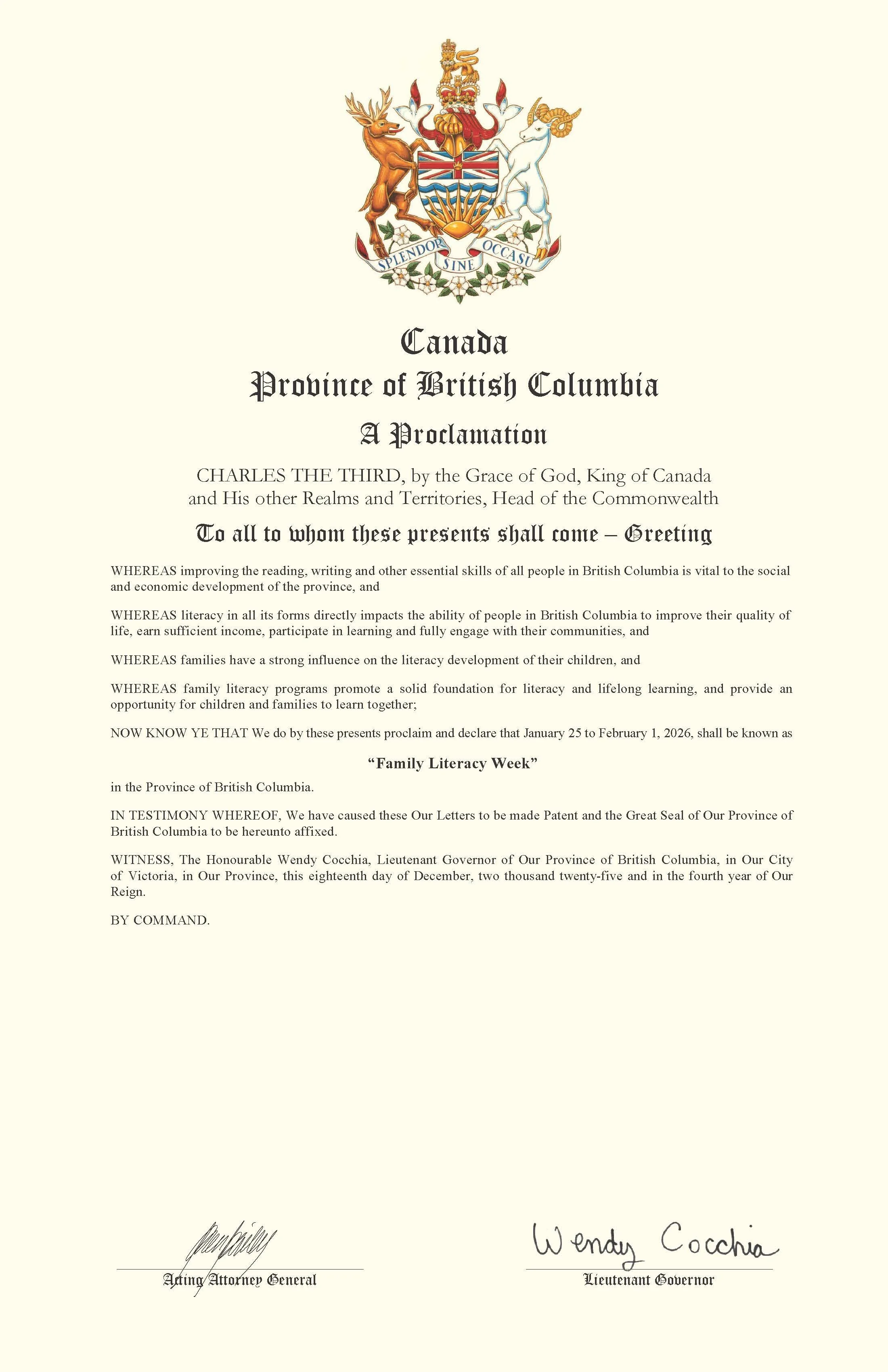
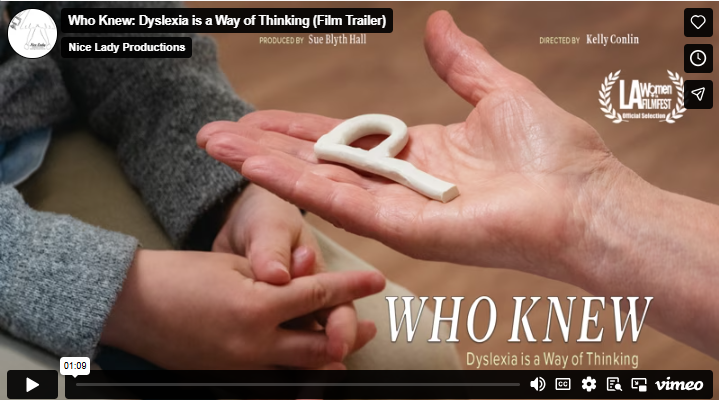
We are off to a great start… from January 24 to January 31 we are contributing to Family Literacy Week – as we host daily free online screenings of our documentary, WHO KNEW Dyslexia is a Way of Thinking. This is your chance for a preview, before it goes on general release… do join us, create a viewing party of you wish, popcorn and Kleenex recommended…! You can read more and RSVP HERE.


Until our documentary can be on general release we are taking bookings for private screenings. Contact Sue Hall at info@thewds.org for details. The general release is expected in 2026 on TELUS TV, Channel 9, Stream+  all made possible with the support of TELUS STORYHIVE Editions and supporters like you! https://www.thewds.org/documentary-who-knew


Kakamega Update:  Two New Zealand Facilitators, Claire Ashmore and Rachel Barwell introduced Geoffrey Ashiono to Davis methods.

Geoffrey is a primary teacher in Kakamega, Kenya and the full story is HERE.  His success has grown in leaps and bounds, to such an extent that he intends to open a school in 2026. 

He just needed the first year’s rent to make this happen. He asked for donations of one month’s rent - $160 CAN. We at the WDS donated one month on your behalf, and he exceeded his goal… the school will open… we will continue to enjoy and share his updates.
 

Can Loop Earplugs Help Neurodistinct and Autistic People with Sound Sensitivity? 

I recently experimented with music festival earplugs to reduce noise in a party setting over the holidays. I had heard they work great for music festivals. There are a few products on the market including Loop Earplugs with variations depending on the setting.  

I never considered them in the past because I figured to work, they must have some kind of electronic noise cancelling technology, and I didn’t want a wireless device in my already sensitive ears. I was so wrong! 

Filtered earplugs like Loop use acoustic design principles that are quite different from old-style foam earplugs. Instead of blocking sound, they filter and reshape how sound reaches your ears so that it’s quieter but still clear — whether that’s speech, music, or everyday sounds.  

I naturally and always have had sensitive hearing which affects my nervous system. And that’s in most settings. Coffee shops, grocery stores, a group of people talking, and especially near electronics like my home office that I work at all day. It took a bit to get used to having something in my ears but after a while I barely noticed them.  

I experimented with using them in the grocery store – Superstore – large, cavernous, lots of people and sounds and I noticed my nervous system was calmer. I took them out to compare the contrast and lasted only a few minutes, they went back in.  

For many neuroatypical  — including autistic individuals and those with dyslexia & ADHD — the world can be loud in ways others may not notice. Background chatter, traffic, clattering dishes, school corridors, or busy classrooms can quickly become overwhelming, leading to stress, fatigue, or shutdown. 

Could products such as Loop earplugs be used as a possible tool to support people who experience sound sensitivity? I was curious if there has been any research on this. 

Understanding Sound Sensitivity in Neurodistinct individuals 

There is some research that shows that atypical sensory processing, including heightened sensitivity to sound, is common among autistic individuals. Rather than being a “problem to fix,” this sensitivity reflects a different way the nervous system processes information. However, in environments not designed with neurodiversity in mind, auditory overload can significantly affect well-being, learning, and participation. 

What Research Tells Us About Reducing Sound Overload 

While there are no peer-reviewed studies specifically on Loop earplugs, research does support the broader concept of sound reduction as a helpful coping strategy: 

  • Studies involving noise-attenuating headphones and earmuffs have shown reductions in stress responses and improvements in behaviour for some autistic children who experience auditory hyper-reactivity. 

  • Clinicians and educators frequently observe that reducing background noise can help some individuals feel calmer, more regulated, and better able to engage. 

These findings suggest that managing sound input can be beneficial, even though individual responses vary widely. 

Here are a couple of articles I found: 

https://pubmed.ncbi.nlm.nih.gov/32997580/  

https://pmc.ncbi.nlm.nih.gov/articles/PMC6091992/  

Where Loop Earplugs and similar products fit in  

Unlike foam earplugs or heavy earmuffs that block most sound, Loop earplugs are designed to filter noise rather than eliminate it. The intention is to reduce overwhelming background noise while still allowing users to hear speech and remain aware of their surroundings. 

This design appeals to many neurodistinct adults and teens who want support in social settings, classrooms, workplaces, or public spaces — without becoming isolated from conversation or important sounds. 

I kept my festival ear plugs on the entire day during that grocery shopping trip – even while driving - and I was able to hear conversations and important traffic sounds like sirens. But in a way that was way more comfortable – without the pulsing and pinging that goes on in my ears. I felt happier and calmer.  

What We Don’t Yet Know 

It’s important to be clear: 
There is currently no high-quality clinical evidence proving that Loop earplugs specifically reduce sensory overload in autistic or neuroatypical people. 

Most support for their use comes from: 

  • Observations by clinicians and educators 

  • Self-reported experiences from neurodistinct individuals like myself and others.  

Some people find them extremely helpful; others find they don’t reduce enough noise, feel uncomfortable, or amplify internal sounds like breathing or chewing. I had the experience of the chewing sounds at first but then I got used to it.  

A Tool — Not a Solution 

Sound-filtering earplugs should be viewed as one possible tool, not a universal solution. Sensory needs are deeply individual. What supports one person may not support another — and that variability is a core feature of neuroatypical people.  

Just as importantly, tools like earplugs do not replace the need for: 

  • Quieter, more inclusive environments 

  • Flexible learning and working spaces 

  • Greater understanding of sensory differences 

My takeaway 

A balanced conclusion from my own experience and research is that sound-reduction tools can help some neurodistinct people manage sensory overload. There is scientific evidence for reducing overwhelming auditory input. There is no specific clinical evidence for Loop Earplugs themselves. And effectiveness is personal.  

I wondered about the developing brain in children and youth. Some experts have hypothesized that very extensive reduction of sound exposure (e.g., constantly using noise‑cancelling devices) might limit opportunities for the brain to refine listening skills, especially in environments with complex soundscapes. This idea comes from auditory neuroscience — the brain learns to distinguish sources of sound by exposure over time — but it is not proven that typical earplug use disrupts this process. This article was about noise cancelling headphones and not noise reduction ear plugs: The Guardian. My takeaway: a balanced approach to the use of noise reduction tools like earplugs would be OK with the developing brain. 

For those exploring sensory supports, products with trial periods or return options allow you to experiment safely and autonomously — honouring your own sensory experience. I invite you to do your own research and inquiry.  

At The Whole Dyslexic Society, we continue to advocate for neuro-inclusive design, informed choice, and respect for different ways of thinking, sensing, and being in the world. 

~Laura O’Neill - Administrator, The WDS 


Social Media News

We are gearing up for Family Literacy Week! Follow us on Facebook, Instagram and LinkedIn. We’ll be sharing an opportunity to join our private screening of our documentary WHO KNEW Dyslexia is a Way of Thinking.


FOOD FOR THOUGHT

ADHD Isn’t Just a Deficit: New Study Reveals Powerful Psychological Strengths

https://scitechdaily.com/adhd-isnt-just-a-deficit-new-study-reveals-powerful-psychological-strengths/

If you want something done, give it to a busy person 😊

Technology in schools

https://youtu.be/agw9P2RnFbA

We gave students laptops and we took away their brains.

Very supportive of Davis as it aids individuals taking responsibility for their own learning.

So interesting.. every generation has out performed itself until technology came along and Gen Z and Gen A are underperforming each other!


Calendar:

January 15 – your Board holds its first meeting of the year… agenda items welcome!

January 24-31Family Literacy Week - free daily screenings of WHO KNEW Dyslexia is a Way of Thinking - RSVP HERE

January 27Lindsay Hodge, a Davis Facilitator, Washington State, is hosting a screening of WHO KNEW to fellow professionals in her office building. This is exactly what we were hoping for… spreading our information widely!

February 7 and 21 – Commencement of the Alberta Aboriginal Head Start Society’s NeuroInclusivity for Early Years course.

February 12 – Sue is speaking at the BC Aboriginal Child Care Society Conference at the Westin Bayshore Hotel, Vancouver.

March 5/6NeuroInclusivity for Early Years core in-person workshop in Edmonton – Davis Learning Strategies for Early Years.

April 23South Vancouver Island Child Care online presentation – Julie and Sue


Sponsorship:

We do have a request… we are extremely grateful to have our program sponsorship financed for the next 10 years, thanks to one very generous client. That tells us that we are doing what we are meant to be doing.

We now need to focus on operational costs, which are not huge but essential. Our grant applications have not been successful this year, and we are very open to a corporate sponsor, or several philanthropic sponsors! If you know of anyone who has a personal interest in our work, to whom we could plead our cause, please do let us know… we would be beyond grateful.

So to you from a very grateful, relatively warm, relatively dry part of Canada, again we wish you all a fantastic 2026.

Please keep in touch, we want to know what you need !

Sue, Laura, Julie, Maureen, Sharon, Paddy, Gisa, Del and Tristan.

Giving Guide

info@thewds.org


Next
Next

Newsletter December 2025