
Newsletter December 2025

Dear Friends,
Welcome to December and the Christmas holidays … hoping they hold everything you wish them to hold for you.
Sue feels the need to point out that any content that originates from the WDS, whether in a Newsletter, or on the website, or social media is exactly that, original. We feel we have a ‘nose’ for AI text and aim to avoid it, and a friend just pointed out that AI can deliver fake testimonials. ALL of ours are REAL from real people, with their approval !!! We will be adding this to our website.

WHO KNEW Dyslexia is a Way of Thinking
Just have a look at our trailer … Kelly Conlin, our Director, has added the laurel icon to it as we were accepted to the Los Angeles Women in Film Festival. Looks SOO good! In December we expect to hear from more festivals, fingers crossed!
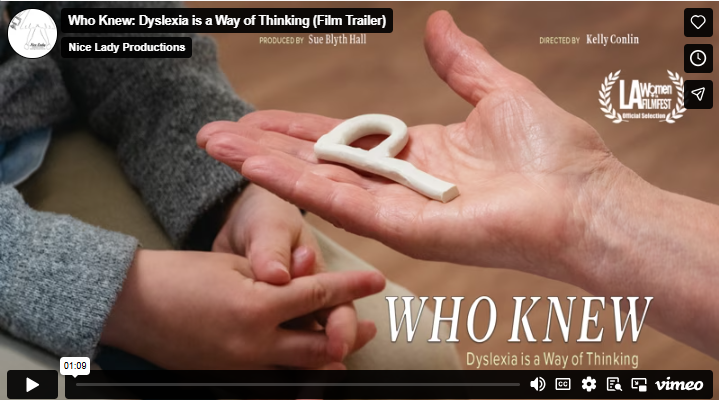
Kelly Conlin is continuing to pursue the Film Festivals.
Private screenings are coming in January:
******Family Literacy Week, January 24 to February 1st, 2026 - we will host daily private screenings. We hope you can join us! RSVP HERE.******
A screening at The Little Prince Cinema, Stratford, ON, January 2026 — it’s the world’s smallest theatre in town, inviting about a dozen local leaders to each showing — people from the city, schools, business community, and local media — just to spark more awareness that our way of thinking really is a gift, not a disability.

Until our documentary can be on general release we are taking bookings for private screenings. Contact Sue Hall at info@thewds.org for details. The general release is expected in 2026 on TELUS TV, Channel 9, Stream+ all made possible with the support of TELUS STORYHIVE Editions and supporters like you! https://www.thewds.org/documentary-who-knew
PREVENTION: NeuroInclusivity for Early Years 2026
Last year, you may remember BC Campus funded the creation of a Professional Development pilot for Early Childhood Educators, ECEs.
The WDS created before and after modules around a modified Davis Learning Strategies for K-3 teachers… which was named DLS for Early Years.
We called the whole package NeuroInclusivity for Early Years. It was very successful.
Following Sue’s October Keynote in Edmonton, The Alberta Aboriginal Head Start Association asked us if we could repeat NeuroInclusivity for Early Years throughout their 21 centres in Alberta. Davis International gave us the go-ahead to use DLS for Early Years and we are now in the process of ‘tweaking’ the original program. We decided to pilot a more accessible format. The BC Campus funding meant that the whole course was free to ECEs and this is not always going to be the case going forward. We intend to use a ‘hybrid’ format of recorded and live presentations which can go forward in the future with Davis International and be more affordable for ECEs.
Our BC Campus Connection continues…
Thanks to Julie Brewer we made the original connection with BC Campus and this year Sue was invited to provide an Accessibility Bites 30 minute presentation on The Gift of Dyslexia. 300 educators across Canada registered and 80 of whom were on the live Zoom call. It was interesting to gear the information to adults and what is needed in school and the workplace. Sue watched two previous presentations on ADHD and Learning Disabilities (a term she never uses) and her presentation was very different.. not too many words, bullet points, images, colours. It was different and she is looking forward to the feedback!

SHARON ROBERT’S CORNER: (just think snow and ski-ing and sledding… Sue)
Have you ever wondered whether your child plays enough? Furthermore, do they play enough outdoors?
Most pediatric specialists recommend a minimum of outdoor play to be one hour daily; 2 hours being the ideal. Active outdoor play has many proven health benefits: better sleep, improved mood, increased focus, healthy muscles and bones (vitamin D) fundamental strength and coordination development and relaxation.
There are some integral benefits of outdoor play to your child’s well-being. Typically, Canadian children get about 20 to 30 minutes of outdoor playtime during recess at school each day. This can vary based on the school, region, and specific policies in place. It has been suggested that walking to and from school could be considered as time spent outdoors, but in most heavily populated areas in Canada, children are bussed to school. So where can a child get this play time especially outdoors? It can be a struggle to find opportunities but just like other important things, you build it into your routine .
Here are some suggestions: A morning walk or a short stroll after dinner. If you can, walk to school or wait for the bus outside instead of in the car. If you are going somewhere, park further away and when weather is appropriate try to eat a meal outdoors. Even little chores such as fetching things out of the car, getting the empty garbage bins help to get some outdoor exposure. Finally, you could just make it a rule to get out and play for 10 minutes a day. Chances are the child will stay out longer, if anything is done consistently, no matter how small, it becomes a habit.
Read more at Sharon’s Corner here….
Sharon Roberts: https://dyslexia.ca/about/
Social Media News
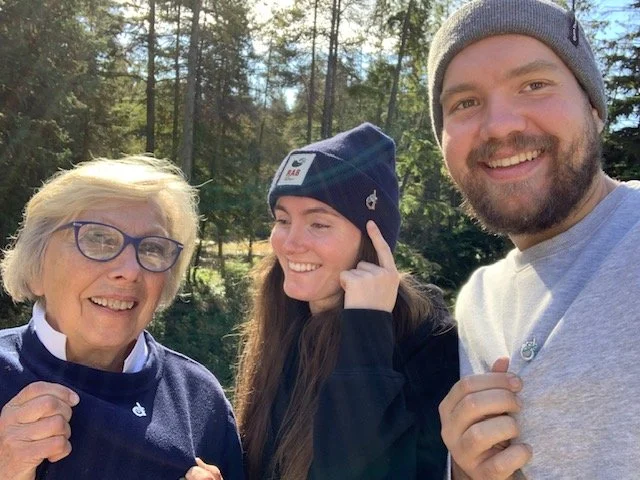
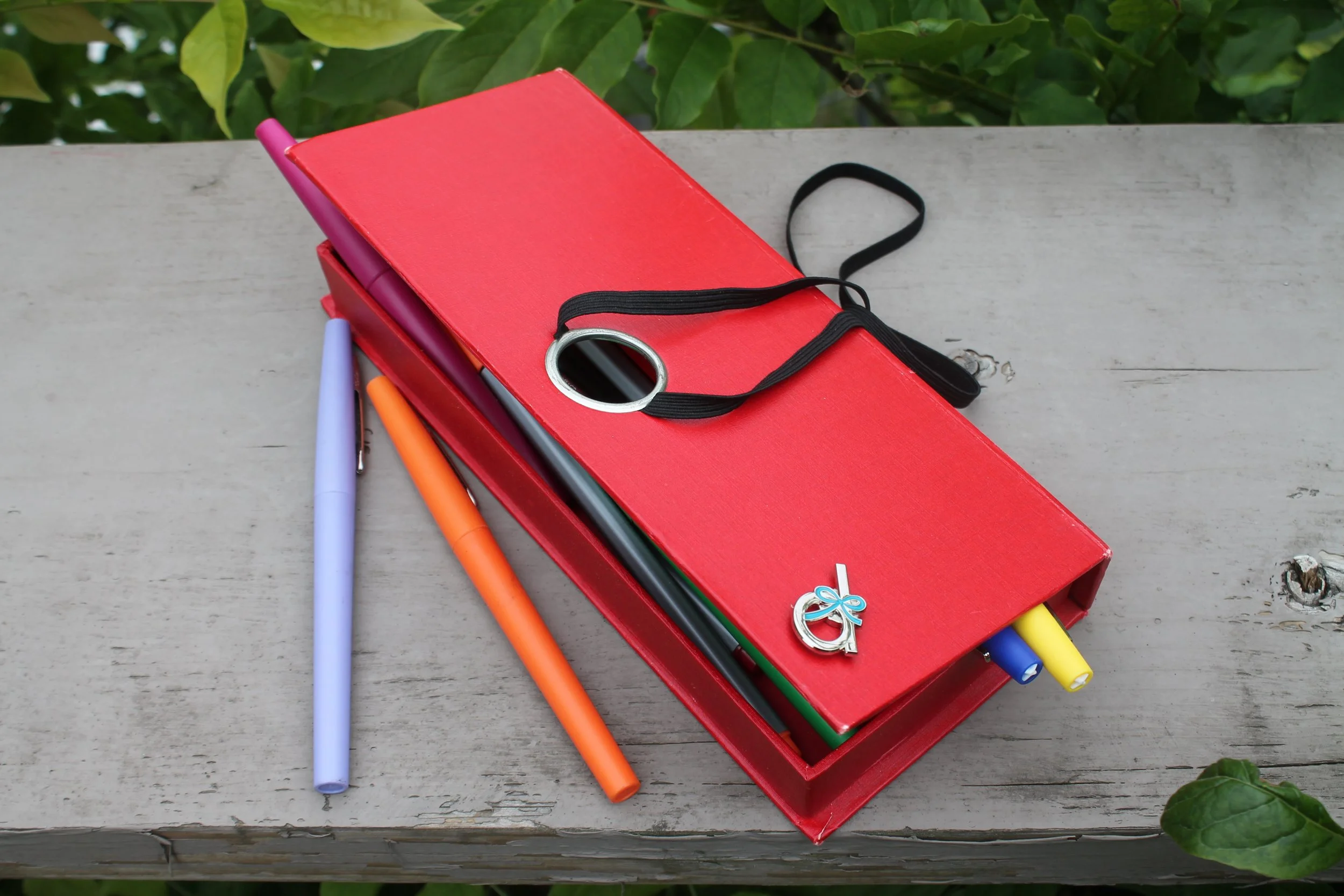
This Giving Tuesday on December 2nd we highlighted our Gifted with Dyslexia Pins. It’s time for us all to show how proud we are of our way of thinking, our gift of altering perception, when we found out there was no universal symbol for dyslexia, we created one, a beautiful, positive one.
All proceeds from the sale of our ‘Gifted with Dyslexia’ magnetic pins go towards our initiatives. Read more about our mission HERE.
If you would like to buy a pin or read more about our pins please visit our page HERE. We would love for this symbol to be known across the world - help spread the message. Thank you!
Visit us on Facebook, Instagram and LinkedIn. See you there!

FOOD FOR THOUGHT
When You Can’t Recall a Word
This is so reassuring, I’ve always said there’s nothing wrong with my brain, its just full.
I like that it mentions pairing meaning with sound… and it ties in with our particular need for picture meaning, especially concepts and proper nouns. Feeling so much better 😊.
https://www.youtube.com/watch?v=wtovy-1-QUM
So True !!!
The late Sir Ken Robinson – such a wise man – very honoured to have met him. I gave him a copy of The Gift of Dyslexia !
https://youtube.com/shorts/x0uI2_hH71c?si=hSzZFBWYCfF-n7u4
How reading changes the way your brain works - BBC World Service
Calendar:

December 4: Shelley Tice will attend 100 Women Who Care in Sidney, hoping to pitch for the WDS.
December 9: Screening of WHO KNEW Dyslexia is a Way of Thinking for the Alberta Aboriginal Head Start Association, followed by the Course Outline of NeuroInclusivity for Early Years.
December 11: Screening of WHO KNEW Dyslexia is a way of Thinking for Davis North America.
2026:
Proposed General Release of WHO KNEW via Telus STORYHIVE… tbc.
January 24 - Feb 1: Family Literacy Week! Join us in an invitation only online screening of WHO KNEW Dyslexia is a Way of Thinking. Each evening and an afternoon screening on the two Saturdays. RSVP HERE
January – Nadine’s Golden Ticket event at The Little Prince Cinema, Stratford, screening WHO KNEW
February 7 - AAHSA Theory
February 21- AAHSA History of Davis Learning Strategies
March 5/6 – AAHSA – 2 Day In Person Davis Learning Strategies for Early Years
April 23 – South Vancouver Island Child Care online presentation – Julie and Sue
As the WDS winds down for the holiday season, we wish you a fabulous, fun, restorative, joyful time and we look forward to a very exciting 2026!
Sue, Maureen, Julie, Tristan, Del, Sharon, Gisa, Laura, Paddy
info@thewds.org
