
Newsletter October 2026
Dear Friends,
In keeping with Thanksgiving weekend, Laura O’Neill has updated our Gratitude page HERE…
If you have been omitted please let us know, we value you all so much. Every comment, every contact, every referral, every donation, every gift impacts the work that we do and we are truly thankful. info@thewds.org
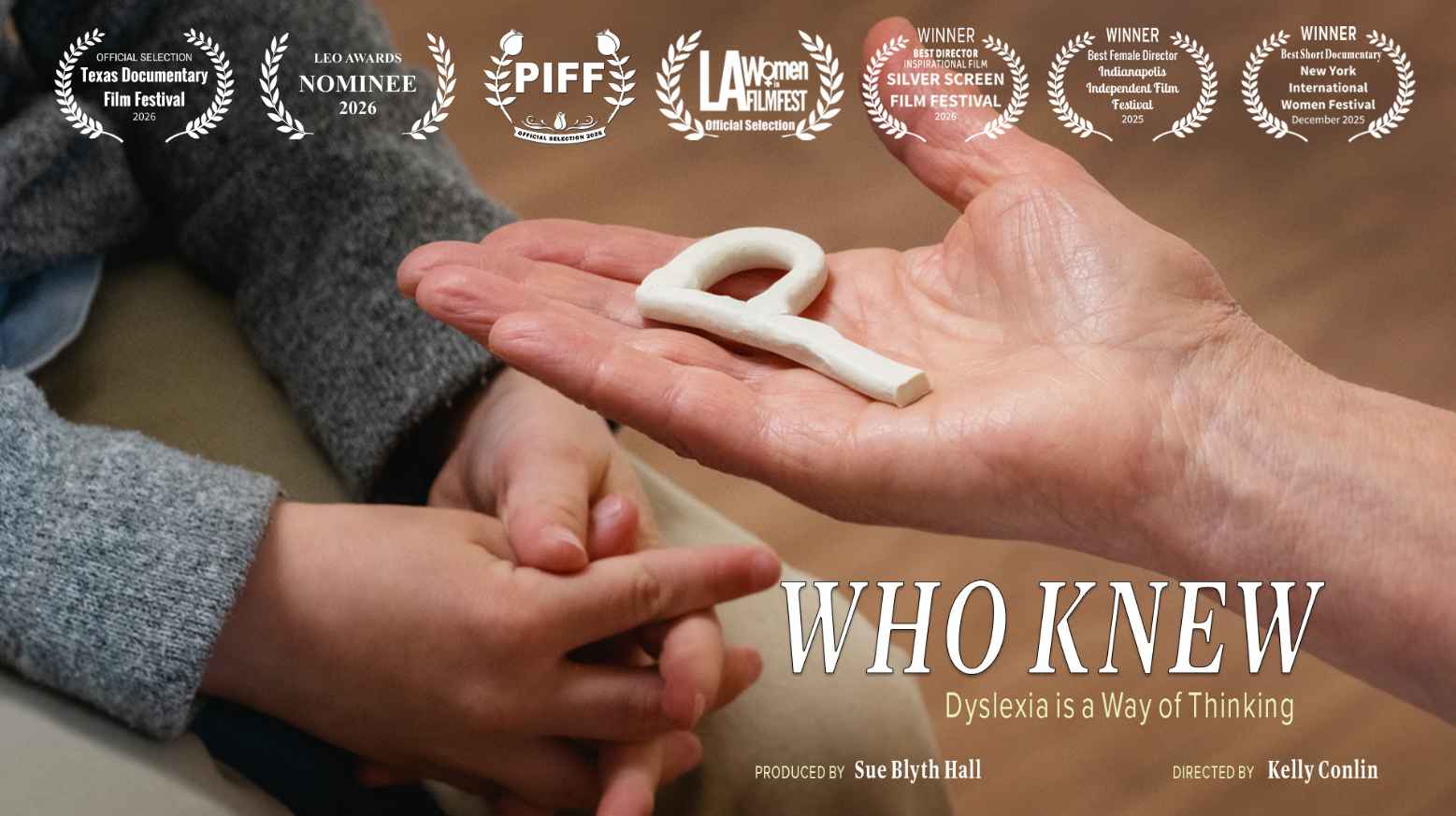
Tales of WHO KNEW:
October 8, International Dyslexia Awareness Day
The Star Cinema in Sidney, BC, graciously agreed to screen WHO KNEW Dyslexia is a Way of Thinking in their regular programming.
There was no way of knowing how many people would show up. Sue waited in the foyer and as people started to arrive, she didn’t recognise anyone.
This was encouraging. The Star had asked for an estimate and Sue had thought maybe 30. They gave us the large theatre, which was just as well because 80 people arrived, only 9 of which Sue knew!
There was wonderful audience involvement with Q and A for Sue and Kelly Conlin, the Director, lasting about 30 mins after the film. Sue has seen this film many, many times, but seeing it on a big screen, in a theatre, even she was enthralled. A huge thank you to all those who came and who had passed on the screening info to their friends/family/colleagues. It was very special to have some children there, who were able to hear the truth about their learning style, their faces said it all.
In Yorkshire, England, three Facilitators, Fionna, Rosy and Sue B screened WHO KEW on October 3 at the Yorkshire Dyslexia Festival in Leeds.
“the screening was very successful and was watched by an audience of 43. I don't think I've ever noticed anyone in tears during a Davis presentation before, yet there were 3 adults reduced to tears by the powerful messages and testimonials. I certainly think the content may have helped to reframe ideas and we were very busy with Q & As afterwards.”
In Washington State, USA, Lindsay Hodge of Kestrel Learning held a screening on October 8, followed by a Panel Discussion.
“Chip Duncan, Executive Director of the Veterans Memorial Museum, got emotional sharing his own lived experience with dyslexia, and he encouraged parents to be careful not to diminish their children's gifts — to honor their gifts and help them recognize them.
Michelle Whitlow, Executive Director of the Lewis County Autism Coalition, spoke about the co-occurrence of dyslexia and autism, and how important it is to screen early and offer the right kind of support. She emphasized helping kids see their experiences in a positive light.
Devon Bergeron, head librarian for the Salkum and Winlock branches of Timberland Regional Library, was inspired by the documentary and wants to incorporate more visual and neuroinclusive activities into her library story times.
Cathy Murphy — a retired teacher with 37 years in schools, 10 of them in the reading resource room — shared that finding the right approach is often a bit of trial and error."

NeuroInclusivity for Early Years
Our first professional development pilot for Early Childhood Educators took place in BC, starting in 2023. The second one took place in Alberta starting Nov 2025. This September some of the Alberta Aboriginal Head Start Assn ECEs wanted to continue the tools and strategies with their little ones, so we are supporting them at a pace which is more realistic, stretching from September 2026 to May 2027. At the same time, Julie Brewer, Langford Montessori is sharing the tools with her new entries. The results never cease to impress us. We are hopeful to run a third incarnation starting September 2027, so if you are interested, or know of possible interest, please do contact us asap.. thank you! info@thewds.org
Ocean Song School, K-8 Waldorf-inspired Education for Victoria, BC https://www.oceansongschool.ca/
Sue has been fortunate to meet with Emily, Mark, Lily and Lee who are bringing this school into being.
Emily Barrieau is an artist, a teacher, an entrepreneur, and an advocate for all children. Working in Education for over thirteen years, she has gained experience as a teacher, private tutor and an administrator.
Emily grew up in Ladysmith, BC and moved down to Victoria in 2008, where she received her B.Ed from UVic in 2013. There she went on to gain a variety of experience across independent schools. In 2019, she stepped into the world of entrepreneurship, founding her own business and growing into her work as a thoughtful business owne
Over the years, she has built a strong background in teaching, curriculum development, school administration, anthroposophy, and business operations. She spent two wonderful years working at the Waldorf school in Squamish. Before that, she supported the development of a small start-up school in Victoria, and worked overseas in China—where she wrote a Ministry-approved Grade 10 course. With her parents, siblings and niece now all living closeby—Victoria truly feels like home.
Emily is currently leading Ocean Song Education Association (OSEA) in their mission to offer Waldorf-inspired Education in Victoria BC. OSEA is developing an educational program that supports the whole child—through the harmonious integration of academic, artistic and social education. Guided by the natural rhythms and stages of childhood, their mission is to nurture a sense of freedom in their students, through developing their capacities to be life-long learners.
Sue is a huge fan of Waldorf education, especially as it is geared to the natural development of the child and feels it is the perfect fit for those children who have our different way of thinking. Here is their website and contact info:
www.oceansongschool.ca; info@oceansongschool.ca.
They would love to hear from you.

Grant Writing Story – Grant writing is no fun…especially when your Chair suddenly realises that she only has 1.5 days to get this particular grant in, rather than the expected 4.5 days. So the decision had to be made, do we go for it, or let it go. The grant required 2 letters of support, so early on day one, Sue sent an email to five wonderful individuals whom she knows to be supportive, on the off-chance that they might get a letter to her within 24 hrs. Two reply immediately, yes ‘can do’… wow, so thankful.. so that means we go for it!
This is where Laura came in. Sue sent the draft application over, Laura sent it back with incredible content for the timeline boxes and a fully completed separate budget file. She’s magical ! Sue sent the application back with some changes/additions. Now it’s the day of… Sue made more slight changes, Laura sent edits and pointed out omissions, Sue did the edits. Three fantastic letters of support had arrived. Sue sent them to Laura.
By now there were several editions of the application in Sue’s grant file… she was trying so hard to work with the latest one. Laura saw more edits and was able to add Sue’s signature. Sue now had to find the submission address. Laura sent all the files pdf-ed. Sue collated them all onto an email and noticed the application file was not signed. She panicked.. just a little… she called Laura with 20 minutes to go before the deadline.. and the panic had now got to the stage where talking wasn’t easy. The correct, signed pdf was located, the files were attached, the email was addressed, all files were double checked and Sue pressed SEND. Phew…
So to say grant writing is no fun is an understatement… it is SO stressful… and if anyone out there is reading this and thinking what are they fussing about, then please apply for the position of WDS Grant Writer… please !!!

Have you ever wished for a news channel that only broadcast good news?
Ari Emanuel: “I’m not stupid and I’m not afraid of being found out..”
https://www.youtube.com/watch?v=ctuvImgGpvE Ari Emanuel

How is this for a ground-breaking Kindergarten design ?
https://www.ted.com/talks/takaharu_tezuka_the_best_kindergarten_you_ve_ever_seen
How phonetic is English? By Jonathan Blank.
“The term “phonics” is frequently used interchangeably with reading instruction, so it’s understandable that many people believe English can be “sounded out.” Ever since alphabets were first invented, alphabetic languages have used letters to represent the sounds in words. The easiest alphabetic languages to learn are those that use one grapheme (a single letter or a letter combination) for each phoneme (the smallest sound unit in a language). As the grapheme/phoneme relationship becomes less direct, learning to read a language becomes more difficult. The Reading Kingdom Curriculum Guide states that approximately 20% of English words can be “sounded out.” At such a low percentage, sounding-out is functionally useless. But where did this 20% number come from?”
The article finishes with : “As long as phonics-focused reading instruction is used to teach children how to decode English, a high failure rate is guaranteed because English is just not a phonetic language.”
Yet it continues !!!
Is a dyslexia-friendly font really friendly for every dyslexic reader?
Elaine Heney books and the dyslexic font:
Elaine has written some lovely books especially for dyslexics. She has used a font specifically designed for dyslexics.
This question often arises, is the font really dyslexic friendly?
You will notice that parts of each letter are in bold, not the whole letter, just parts of it. The idea behind it is that the creator is working from the idea that letters flip on the page, so he ‘weights’ them to ensure they do not. We, as in anyone connected with Davis methods, we know that it is not the letter moving, it’s stuck to the page, it is our Mind’s Eye that is moving around the letter. So for me, the premise is flawed.
When I look at it, I am instantly confused, why is that bit of the letter darker and thicker than the rest? What is the one thing that sends our Mind’s Eye off into space… confusion! So the letter is actually causing me to be more dyslexic
Having said all that, there are some who like it, the spacing in her books is great. So, I suggest you ask your dyslexic if they like it or not, before you buy the books.
Local News:
There have been some interesting articles lately.. one announced a dedicated dyslexia facility to open next year in Vancouver. https://www.cbc.ca/news/canada/british-columbia/cantre-for-dyslexia-vancouver-9.7333522
On further investigation it is connected to Fraser Academy which is very much based on Orton Gillingham, phonetic instruction.
The second article was about the violent behaviour in classrooms: https://www.ctvnews.ca/vancouver/article/kicked-bitten-slapped-bc-teachers-say-classroom-violence-is-out-of-hand/. Sue contacted CBC, CTV and Global to explain that behaviour is the result of a need not being met. If at least one-third, and possibly one half of the children in school nowadays think differently from the way they are taught.. there is a very obvious connection and giving them more of what they couldn’t do in the beginning (OG) is not the answer. She has not been contacted as yet 😊.

Join Us in Making a Difference
Support our efforts to bring the message of WHO KNEW Dyslexia is a Way of Thinking to more people around the world.
CALENDAR:
October 17 - Sue Hall and Julie Brewer will be attending the 2nd Annual Coast Salish Early Learning Gathering
at the Tribal School in Brentwood Bay, BC.
October 23 - Sue presents virtually at a Professional Development Day at Cortes Island Academy
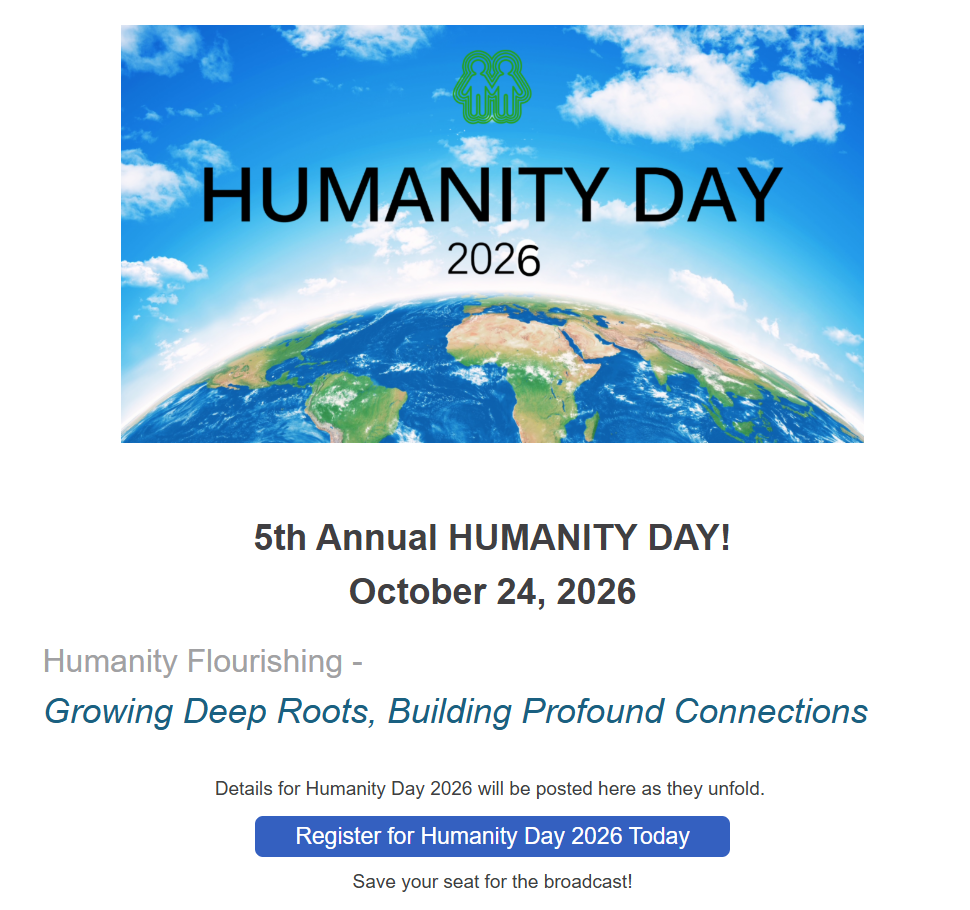
October 24 – 5th Annual Humanity Day Global Broadcast where Sue is a finalist – 8am-1pm PT.

October 24 – WHO KNEW is in the Texas Documentary Film Festival, Austin.
October 29: WDS Board Meeting.

October is quite the month! Circling back to our Thanksgiving theme, we are exceptionally grateful for all the amazing, exciting, inspiring, thoughtful contacts that we have made and continue to make.
Gratefully yours,
Sue, Laura, Julie, Sharon, Paddy, Maureen, Gisa, Tristan, Del
info@thewds.org
